Brand Video Production in 2026: A Field Guide From Live Accounts
Beautiful brand films often die in paid media because nobody planned them for a phone screen and a two-second attention span. This guide shows how we plan video that looks good and still performs.
Key takeaways
- Plan every brand video around where it will run. A phone feed, a YouTube pre-roll and a homepage hero need different edits.
- The first two seconds decide most outcomes in paid social. Script the hook before anything else.
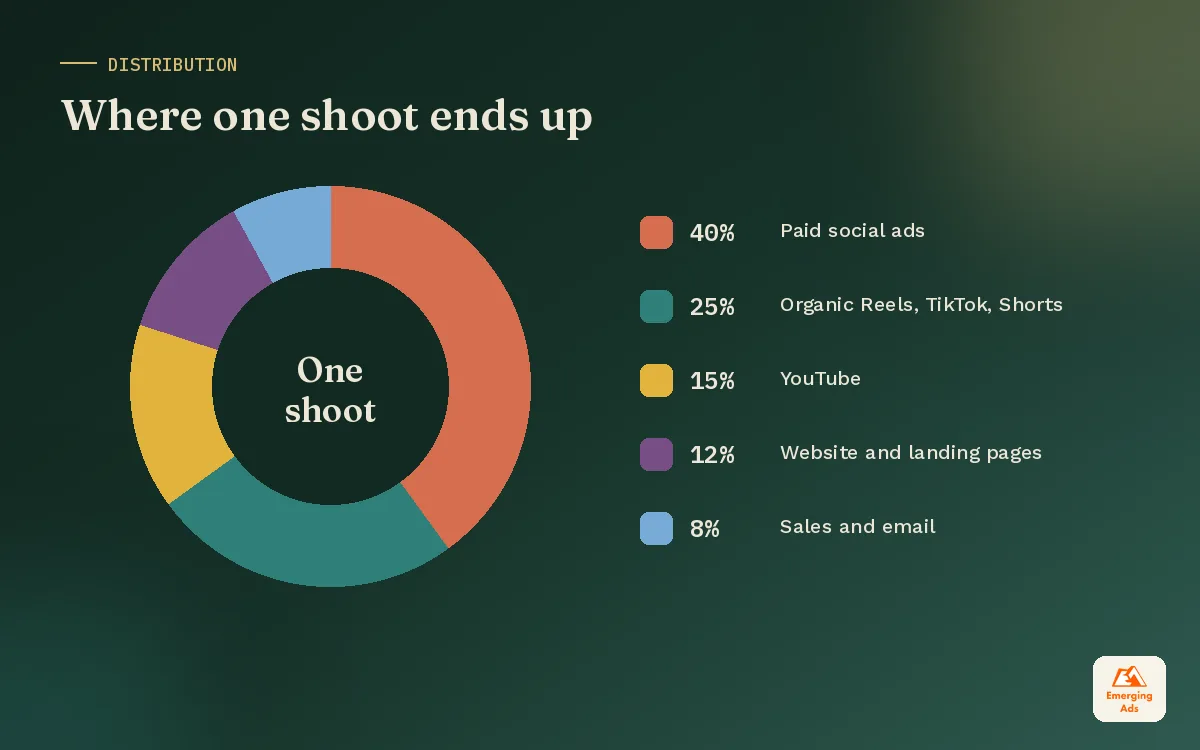
- One production day should deliver a library of cuts: long, short, vertical, square, with and without captions.
- Real people, real product in use and clear sound beat expensive visuals with a vague message.
- Judge video by thumb-stop rate, hold rate and conversions, not by how many people in the office liked it.
01What brand video production means in 2026
Brand video used to mean one polished film that lived on the homepage and played at events. That still has a place, but the centre of gravity has moved. Most people now meet your brand on a phone, in a feed, with the sound off, while scrolling past dozens of other videos.
So when we talk about brand video production, we mean planning and shooting footage that builds your brand and works as advertising. The same production should feed Meta ads, TikTok, YouTube ads, organic social and your website. If you are new to YouTube as an ad channel, our main site explains what YouTube ads are and why they matter.
That is a very different brief from a traditional corporate film, and it changes almost every decision: the script, the shot list, the framing, the crew and the edit.
02The four types of brand video worth making
| Video type | Job it does | Typical length | Where it runs |
|---|---|---|---|
| Brand story | Explains why you exist and what you believe | 60 to 120 seconds, plus short cuts | Website, YouTube, top of funnel ads |
| Product in use | Shows the product solving a real problem | 15 to 45 seconds | Paid social, product pages, marketplaces |
| Customer testimonial | Proof from a real buyer | 20 to 60 seconds | Retargeting ads, landing pages, sales emails |
| Founder or expert | Builds trust and authority | 30 to 90 seconds | LinkedIn, YouTube, organic social |
Most brands should start with product in use and testimonials, because they drive sales fastest. Brand story films become more valuable once you are spending enough on awareness to need a stronger emotional anchor.
03Pre-production: where good videos are really made
Most of the quality in a video is decided before a camera is switched on. Rushed pre-production is the main reason shoots go over budget and edits feel flat.
Start with the message, not the look
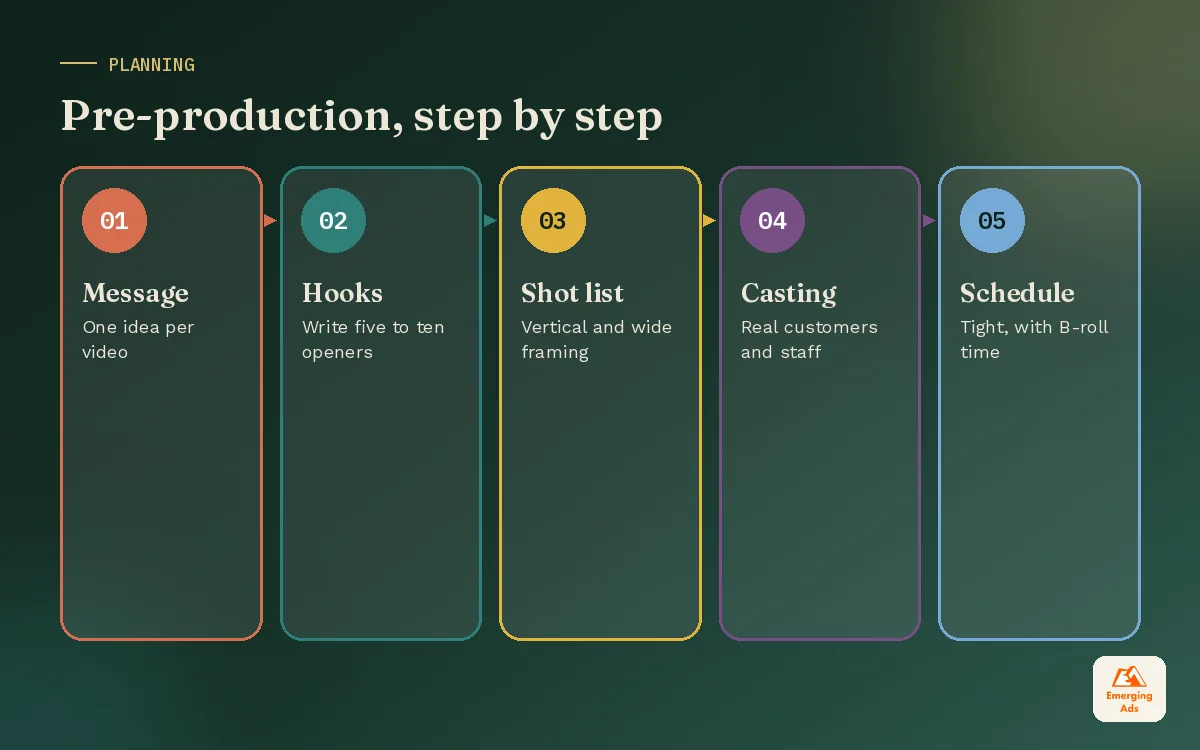
Before discussing locations or colour grades, write down the single idea each video must leave in the viewer’s head. It should come straight from your brand strategy and sound like your brand voice. If you cannot say it in one sentence, the video will wander.
Write hooks first
For paid social, write five to ten opening lines before you write the rest of the script. Then plan to shoot all of them. Testing hooks is the cheapest way to find a winning ad, and you cannot test what you did not film.
Build a shot list for every format
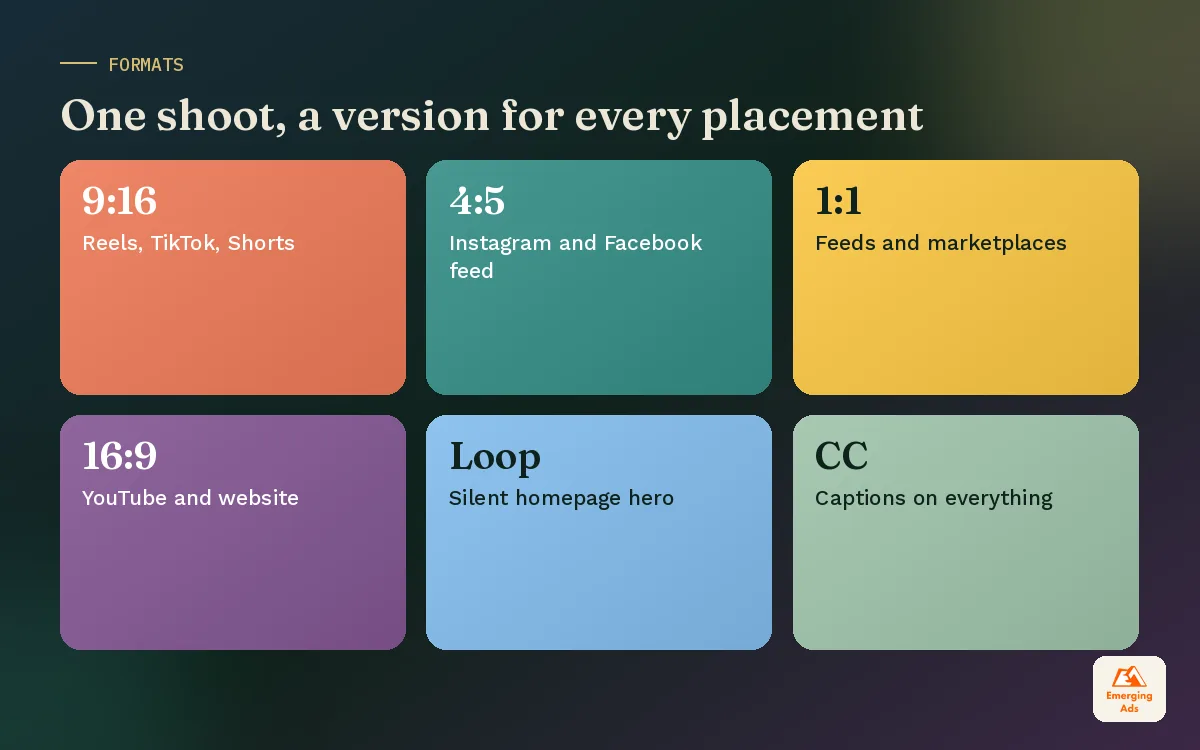
Plan vertical and horizontal framing from the start. Shoot wide enough to crop for 9:16, 1:1 and 16:9, or shoot key moments twice. Add B-roll of hands, product details, reactions and environment. Editors always need more B-roll than you think.
Cast real people where you can
Customers and staff often outperform actors in ads because viewers believe them. Prepare them with questions, not scripts, and let them speak in their own words.
04Production day: getting the most from every hour
A well-run shoot day should give you enough material for weeks of content. These habits make the difference:
- Sound first. Viewers forgive average picture far more than bad audio. Use proper microphones for every speaking part.
- Light for skin and product. Natural light plus one or two simple sources is often enough. The product must look true to life.
- Shoot the hooks in several ways. Different lines, angles and energy levels give you real options to test.
- Capture raw moments. Unpolished behind-the-scenes clips often become the best-performing organic posts.
- Record voiceover options on the day. It is much cheaper than booking another session later.
- Log everything. A simple shot log saves hours in the edit and makes future reuse possible.
05Editing for each platform
The edit is where one shoot becomes many assets. Each platform rewards slightly different choices, so plan distinct versions rather than resizing one cut.
| Platform | Format | Edit style that tends to work |
|---|---|---|
| Instagram and Facebook feed | 4:5 or 1:1 | Clear hook, bold captions, product visible early |
| Reels, TikTok, Shorts | 9:16 vertical | Fast cuts, native feel, text on screen, trending audio where it fits |
| YouTube in-stream | 16:9 | Brand and message within five seconds, before the skip button |
| Website hero | 16:9, silent loop | Calm, visual, no reliance on sound, light file size |
| Landing pages | 16:9 or 1:1 with controls | Testimonial or demo, with captions and a clear next step |
Always add captions. A large share of social video is watched without sound, and captions also help accessibility. Keep file sizes light on your site so video does not hurt page speed or landing page performance.
06What brand video production costs
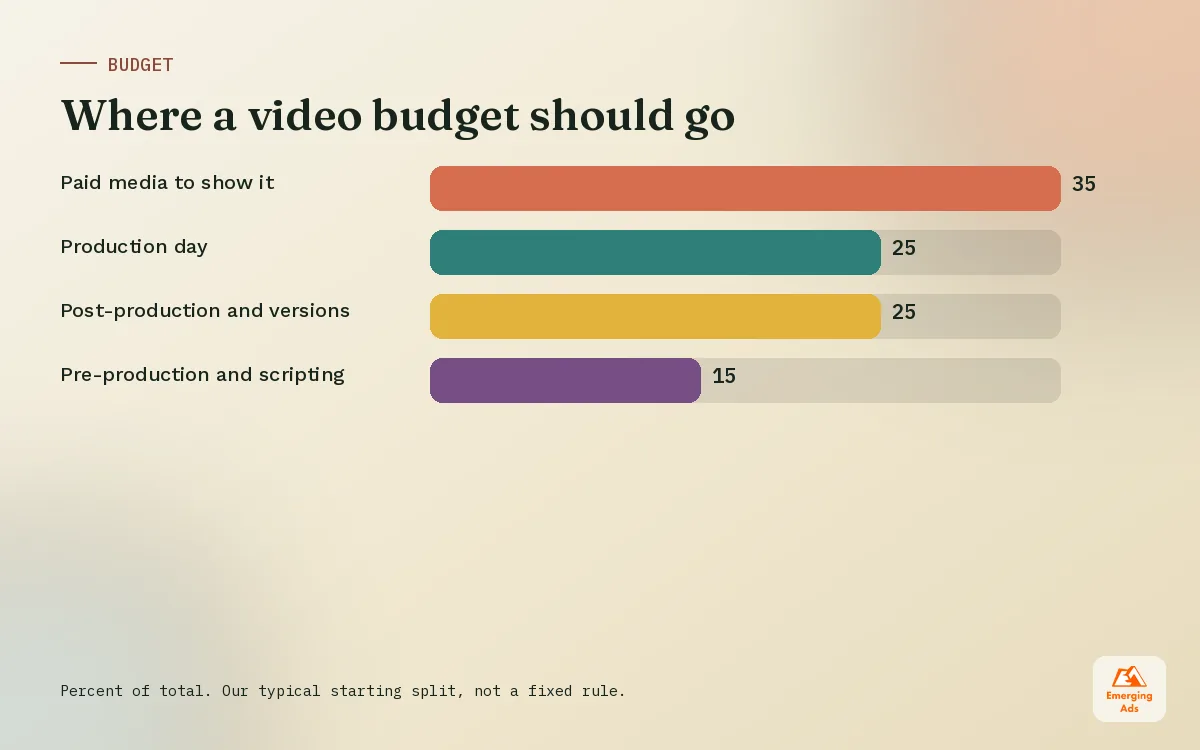
Costs vary enormously by crew size, locations, talent and post-production. Rather than quote numbers that will not fit your market, here is how the budget usually splits and where it can safely be trimmed.
- Pre-production covers strategy, scripting, casting and planning. Do not cut here. It protects the rest of the budget.
- Production covers crew, equipment, locations and talent. You can often trim by shooting in one location with a small crew.
- Post-production covers editing, colour, sound and motion graphics. Budget for multiple versions, not one master edit.
- Distribution covers paid media to get the video seen. A great video with no media budget reaches very few people.
For smaller budgets, a hybrid approach works well: one professional shoot for your core brand and product footage, plus ongoing UGC-style content from customers or creators to keep ads fresh.
07A sample shot list for a one-day product shoot
This is a simplified version of the shot list we use for a direct-to-consumer product brand. It is built so the editor can cut ads, social posts and website loops from the same day.
| Block | Shots to capture | Used for |
|---|---|---|
| Hooks | Five to ten opening lines, each filmed in two framings | Ad testing across Meta, TikTok and YouTube |
| Problem | The frustration before the product, shown not told | The first few seconds of story-led ads |
| Product in use | Hands, close-ups, real results, unboxing | Product ads, product pages, marketplaces |
| People | Two or three customers or staff answering questions | Testimonial ads, landing pages, sales emails |
| Founder | Why the brand exists, in their own words | Brand story cut, LinkedIn, About page |
| B-roll | Environment, details, process, reactions | Transitions, organic social, website loops |
| Stills | Product and lifestyle photos between takes | Static ads, email, social |
Build the day around the product-in-use and people blocks, because they drive sales fastest. Hooks are quick to film once everyone is warmed up, so leave them for the middle of the day when energy is highest.
08Working with creators and UGC alongside your shoot
Professional footage builds the brand. Creator and customer footage keeps ads feeling native and fresh. The two work best together.
- Brief creators with your hooks. Give them the problem, the promise and three hook ideas, then let them say it their own way.
- Ask for raw files. Unedited clips let your editor build multiple versions and match your captions and colour.
- Mix formats in testing. Run polished and creator-led versions of the same message side by side. Audiences often surprise you.
- Agree usage rights in writing. Confirm how long and where you can run creator content in paid ads.
Over time, you learn which style your audience responds to in each placement, and your production budget follows the results rather than guesswork.
09Measuring brand video performance
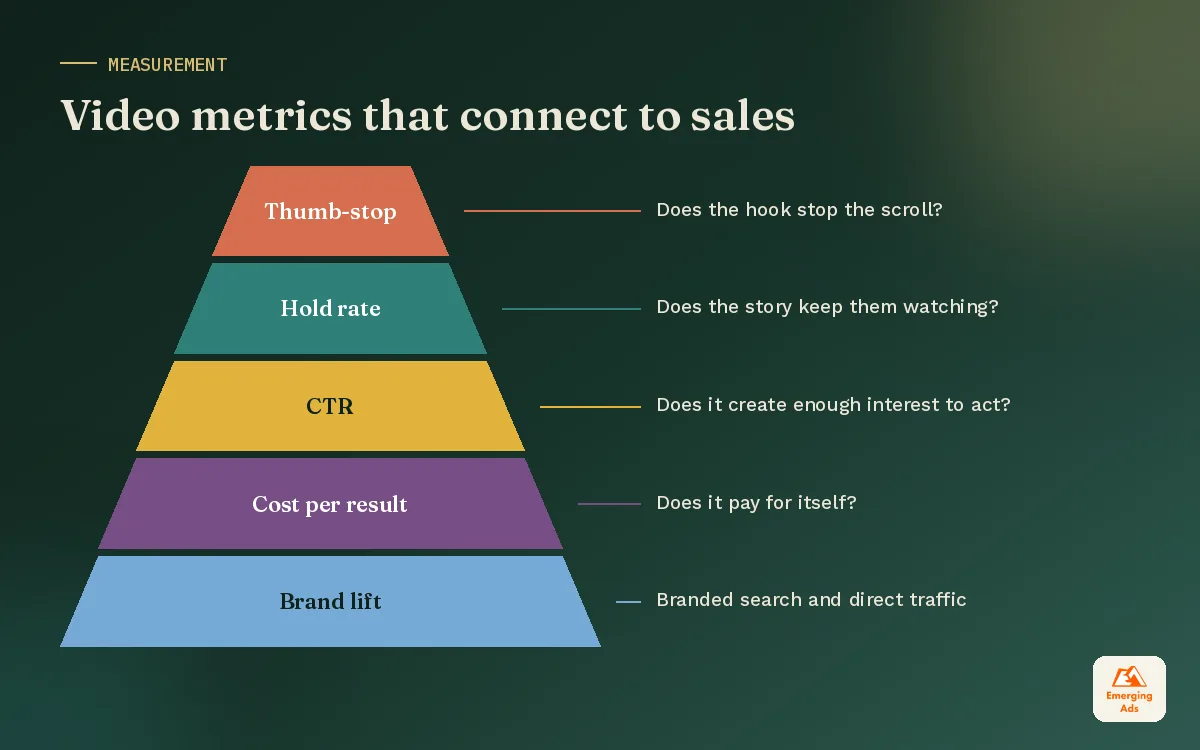
Video creates a lot of vanity metrics. We focus on the ones that connect attention to action.
- Thumb-stop rate: the share of impressions that watch the first few seconds. This judges your hook.
- Hold rate: how many viewers stay to the middle or end. This judges the story and pacing.
- Click-through rate: whether the video creates enough interest to act.
- Cost per result: leads or purchases driven, the number that pays for production.
- Brand lift signals: branded search and direct traffic after big video pushes.
Test hooks and edits in small budgets before scaling. You will often find the winning version was not the one the team expected. You can see examples of how video has worked for real accounts on our success stories page.
10Brand video mistakes we see most
- Logo intro before the hook. Viewers scroll away before your story even starts.
- Only one version. A single cut cannot serve every placement well.
- Scripted testimonials. Customers reading lines sound fake. Interview them instead.
- No clear next step. Every paid video needs one simple call to action.
- Heavy website video. Large uncompressed files slow pages and hurt conversions.
- No plan for reuse. Footage sits on a hard drive when it could feed months of social content.
11Planning your first or next brand video
If you are starting out, keep the first project tight: one core message, one location, a product in use sequence, two or three customer interviews and a list of hooks. Plan the edits for paid social first, then your website. That single shoot can carry your ads and social for a month or more, especially if it slots into a clear content strategy.
Our video content production team plans every shoot with the paid media team in the room, so creative is built to perform from day one. We also connect it to social media management, Instagram and ecommerce marketing where relevant. If you want a view on how your current videos are performing, start with a free audit, or see how our branding and content service fits it all together.
Frequently asked questions
Straight answers to what clients ask us most about brand video production.
What is brand video production?
How long should a brand video be?
How much does brand video production cost?
What should a brand video include?
Should I use professional production or UGC?
What video formats do I need for social media?
How do I make video ads that convert?
How long does a brand video take to produce?
How do I measure the success of a brand video?
Can one shoot really create a month of content?
Do I need a script for a brand video?
Want your next shoot to feed a month of ads?
Share what you are planning and we will turn it into a shot list built for paid social, YouTube and your website, so one production day does the work of five.
Book your free audit