Brand Awareness Campaigns in 2026: A Field Guide From Live Accounts
Awareness campaigns get a bad name because they are often run without a plan to turn attention into sales. This guide shows how we run awareness as the first step of a funnel, with numbers you can defend.
Key takeaways
- An awareness campaign should create memory in a defined audience and feed warm audiences to your performance campaigns.
- Distinctive creative matters more than clever targeting. People need to remember it was you.
- Video platforms are usually the most efficient for awareness, especially Meta, YouTube and TikTok.
- Plan the handoff: who sees the awareness ad, what they see next, and when they are asked to buy.
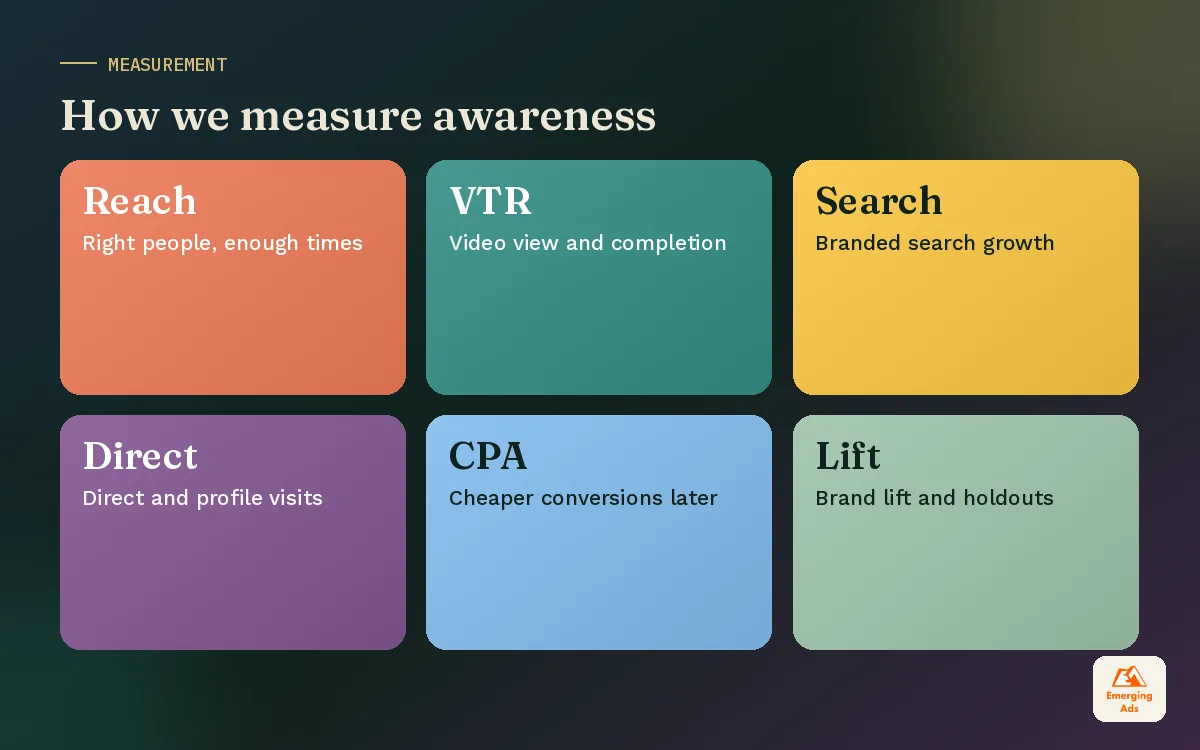
- Measure with reach, frequency, video completion, branded search, direct traffic and lift in performance results.
01What a brand awareness campaign is really for
A brand awareness campaign aims to make more of the right people know and remember your brand. It does not ask for a sale straight away. That is exactly why it makes finance teams nervous, and why many brands cut it first when budgets tighten.
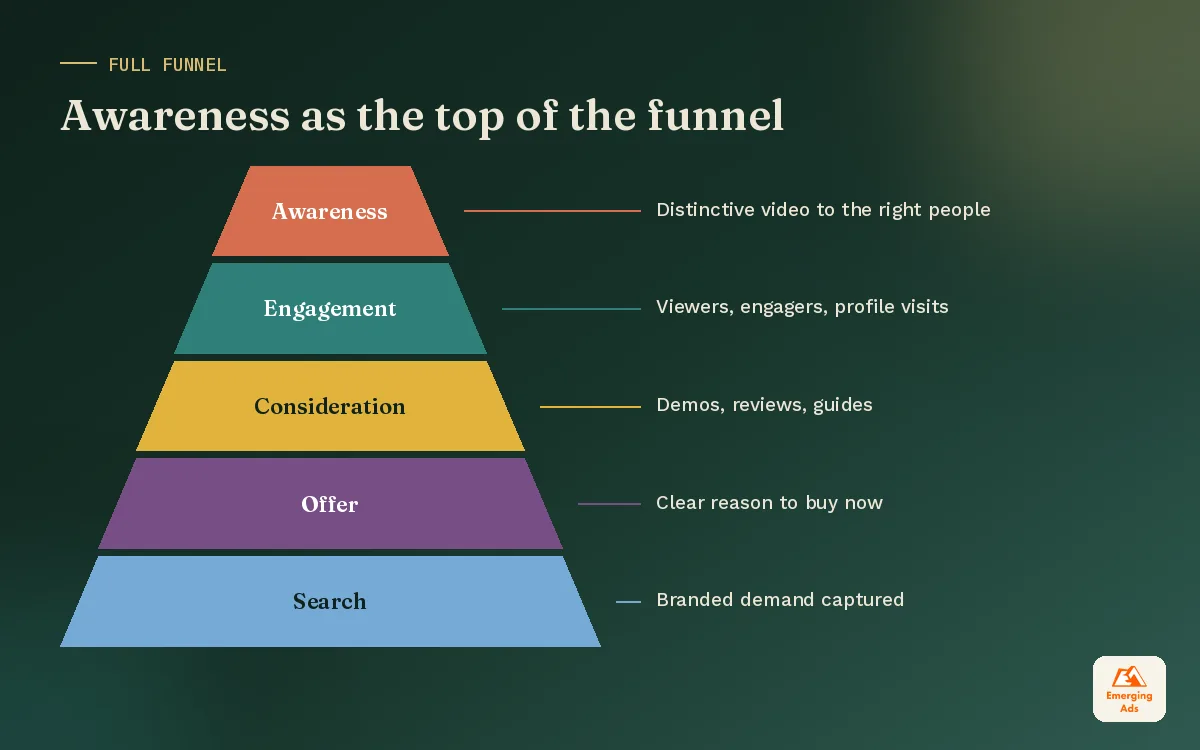
Our view, from years of running paid media, is that awareness only earns its budget when it is designed as the first step of a funnel. Its job is to create memory in people who are likely to buy later, and to build a pool of warm audiences your performance campaigns can convert more cheaply. Run in isolation, it is hard to justify. Run as part of a plan, it lowers your cost per sale over time.
02When you should (and should not) run awareness campaigns
Awareness spend is not right for every business at every stage. Use these signals to decide.
| Run awareness when | Hold off when |
|---|---|
| Performance campaigns are hitting a ceiling and costs are rising | You have not yet proved your offer converts at a profit |
| You are launching a new product, category or market | Your website and landing pages convert poorly |
| Branded search volume is flat or falling | Tracking is broken and you cannot measure outcomes |
| Competitors are winning mind share with bigger budgets | Your positioning is unclear and creative is generic |
| You have distinctive creative worth repeating | You can only afford a few days of spend |
If several items in the right column apply, fix them first. Awareness magnifies what is already there. A clear brand strategy and pages that convert make every awareness pound work harder. Our conversion rate optimisation team often fixes the site before we scale awareness spend.
03Step 1: Define the audience you want to remember you
Broad awareness is expensive and hard to measure. Narrow it down to the people who could realistically buy in the next six to twelve months.
- Start with your best customers. Build lookalike or similar audiences from purchasers or high-value leads.
- Add interest and behaviour layers only where they clearly match buying intent.
- Use broad targeting with strong creative on Meta and TikTok, letting the algorithm find people who engage, while excluding existing customers.
- Define the category moment. When does your buyer start looking? Awareness should land before that moment, not during it.
04Step 2: Build creative people will remember
In awareness, creative does most of the work. Targeting finds people, but creative decides whether they remember you. The most common failure we see is creative that is pleasant but anonymous, so viewers enjoy it without knowing who made it.
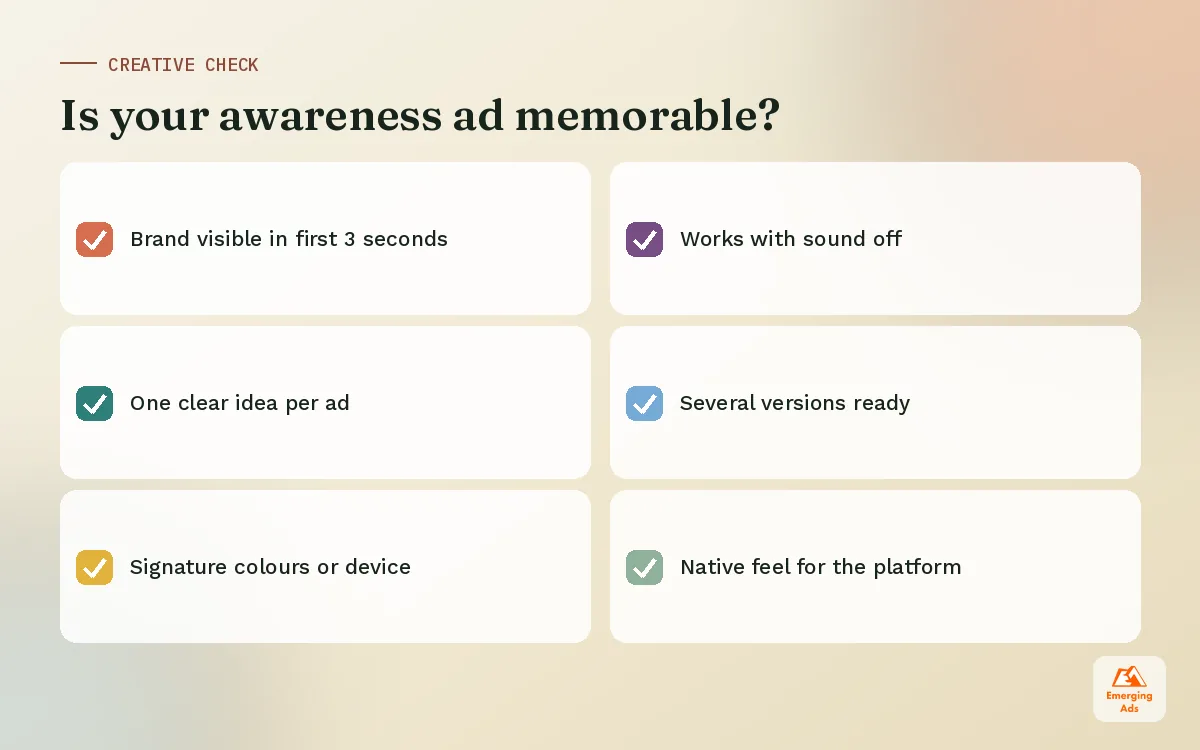
Make it distinctive
Use the same colours, characters, sounds, taglines or visual devices again and again. Recognition builds through repetition. Your brand guidelines should define these signature elements so every ad reinforces them.
Brand early
Show the brand or product in the first few seconds. Many viewers never reach the end. If your logo appears only in the final frame, most people will never see it.
One idea per ad
Awareness ads should leave one clear impression. Trying to explain every feature produces clutter nobody remembers.
Plan for many versions
Audiences tire of the same ad quickly. Plan several executions of the same idea. Our brand video production guide explains how one shoot can deliver a library of cuts for this.
05Step 3: Choose the right channels
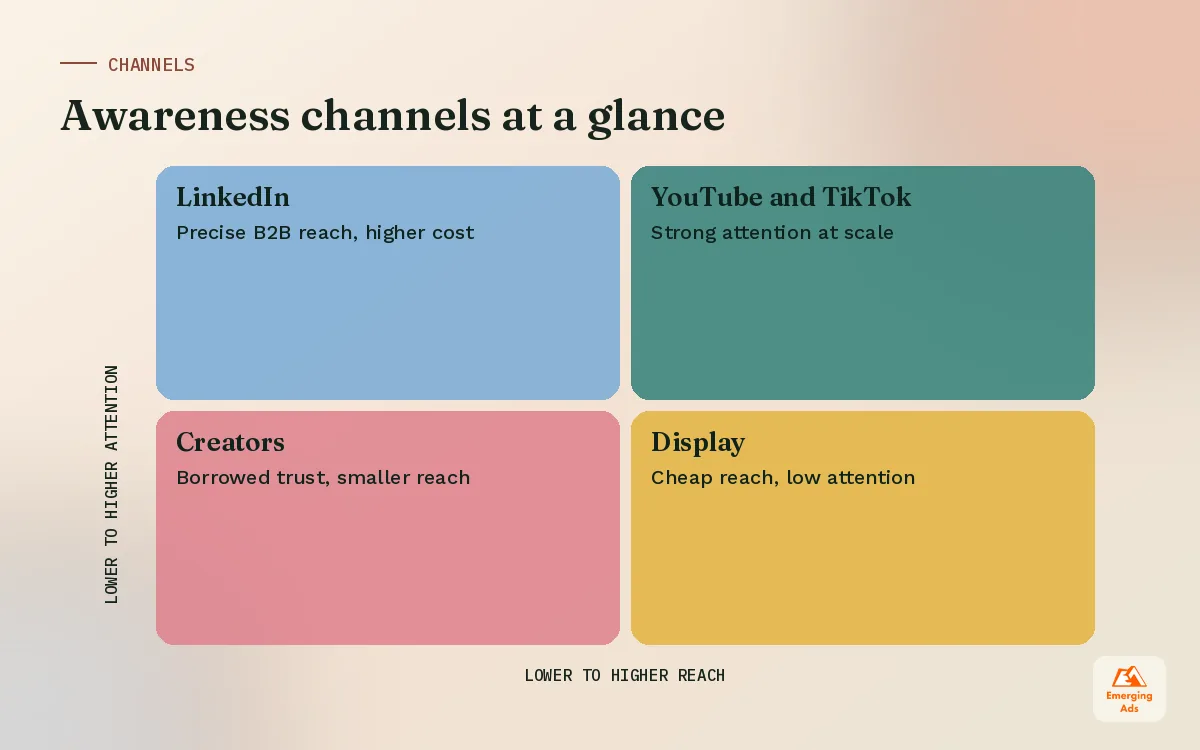
Different channels suit different awareness goals. Most brands get the best results by combining one or two video platforms with retargeting on their main conversion channel.
| Channel | Awareness strength | Watch out for |
|---|---|---|
| Meta (Facebook and Instagram) | Huge reach, strong video and Reels inventory, flexible audiences | Creative fatigue, needs frequent refresh |
| YouTube | Long attention, strong for storytelling and consideration | Skippable formats need the message early |
| TikTok | Cultural relevance, efficient reach with younger audiences | Must feel native, polished ads often underperform |
| Precise B2B targeting by role and company | Higher costs, needs genuinely useful content | |
| Display and programmatic | Cheap impressions at scale | Low attention, brand safety checks needed |
| Creators and influencers | Borrowed trust and authentic voice | Hard to measure, needs clear briefs |
We run these through our Meta ads, YouTube ads, TikTok ads and LinkedIn ads teams, with one media plan so frequency and budget are managed across all of them rather than in silos.
06Step 4: Set budget and frequency
Awareness needs enough budget to reach your audience several times. Spreading a small budget across many channels usually produces a little reach everywhere and memory nowhere.
- Concentrate. Pick one or two channels and reach your core audience properly before adding more.
- Plan frequency. People often need to see a brand several times before it sticks. Watch frequency weekly and refresh creative when performance drops.
- Run long enough. A burst of a few days rarely builds memory. Plan in weeks and months.
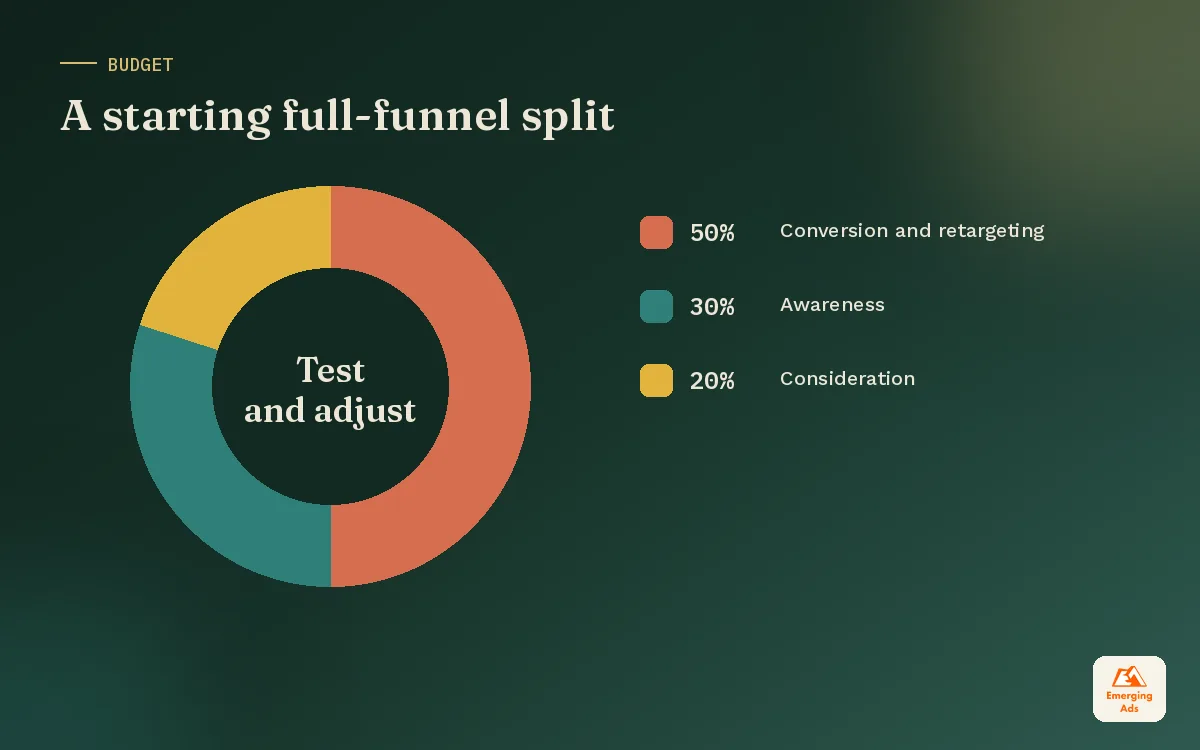
- Balance with performance. Many brands land somewhere between a fifth and a half of total paid spend on awareness, depending on growth stage and category. Treat that as a range to test, not a rule.
07Step 5: Plan the handoff to performance
This is the part most awareness campaigns miss. Every awareness campaign should create audiences you can reach again with a stronger offer.
- Build engagement audiences: people who watched 50 percent or more of your video, engaged with posts or visited your profile.
- Retarget with consideration content: product demos, testimonials, comparisons and guides.
- Follow with a clear offer: for those who visited your site or engaged deeply.
- Capture intent in search: make sure your Google Ads branded campaigns are ready for the people who now search your name.
This sequence is where awareness spend turns into revenue. It also gives you a much fairer way to judge awareness: by how much cheaper it makes your conversions later.
08How to measure brand awareness honestly
Awareness is harder to measure than sales, but it is not a black box. We use three layers of measurement.
Delivery metrics
Reach, frequency, cost per thousand impressions, video view rate and completion rate. These tell you whether the campaign ran well, not whether it worked.
Memory signals
Branded search volume, direct traffic, social mentions and profile visits. Growth in these during and after campaigns is a strong sign people remember you. A clean GA4 setup makes the trends much easier to read.
Business impact
Changes in performance campaign costs, conversion rates on retargeting and overall sales trends. Brand lift studies from platforms and holdout tests can add confidence when budgets are large. For the full picture, a proper attribution model helps separate what awareness contributed from what would have happened anyway.
09A sample 12-week awareness plan
This is the kind of structure we use for a consumer brand moving into awareness for the first time. Adjust the timing to your category and budget.
| Weeks | Focus | What happens |
|---|---|---|
| 1 to 2 | Setup | Audiences built, tracking checked, baseline for branded search and direct traffic recorded |
| 3 to 6 | Launch and learn | Three to five video concepts live on one or two platforms, weekly creative review |
| 7 to 9 | Handoff | Retargeting to video viewers and engagers with proof content and offers |
| 10 to 12 | Evaluate and scale | Compare branded search, retargeting costs and sales to baseline, scale what worked |
The baseline in weeks one and two is what makes the evaluation honest. Without it, every change in sales becomes a matter of opinion.
10Awareness for B2B vs consumer brands
The principles are the same, but the execution differs a lot between consumer and business audiences.
| Consumer brands | B2B brands | |
|---|---|---|
| Main channels | Meta, TikTok, YouTube, creators | LinkedIn, YouTube, industry newsletters, podcasts |
| Creative style | Emotional, visual, fast, native to the feed | Useful, expert, founder or practitioner led |
| Buying cycle | Days to weeks | Months, with several decision makers |
| Handoff | Retarget to product and offer | Retarget to guides, webinars and case studies |
| Key signal | Branded search and repeat visits | Target account engagement and inbound demo quality |
For B2B, awareness often looks like being genuinely useful to a narrow group of decision makers, consistently, for a long time. Our LinkedIn content work pairs founder posts with light paid amplification for exactly this reason.
11Brand awareness campaign ideas that work
- Founder story series: short videos about why the brand exists, told plainly.
- Problem-first content: ads that name a frustration your audience feels, without selling.
- Customer spotlights: real people using the product in real life.
- Useful education: tips and guides that make your brand the helpful expert. Pair these with content strategy so the ads and articles support each other.
- Creator partnerships: trusted voices introducing you to their audience, managed through social media management.
- Seasonal moments: campaigns around events your audience already cares about.
12Awareness campaign mistakes to avoid
- Judging awareness on last-click sales. It will almost always look bad by that measure.
- Forgettable creative. If people cannot recall the brand, the reach was wasted.
- No retargeting plan. Warm audiences go cold if nobody follows up.
- Too many channels, too little budget. Memory needs repetition.
- Stopping too early. Awareness compounds. Most brands give up just before it starts paying back.
If you want awareness spend that connects to sales, our branding and content and paid media teams plan it together from the first brief. Look at our client success stories for examples, or book a free audit and we will map how your current awareness spend could feed your performance campaigns. You can also see how we support growing B2C brands with full-funnel plans.
Frequently asked questions
Straight answers to what clients ask us most about brand awareness campaign.
What is a brand awareness campaign?
How do I increase brand awareness quickly?
Which platform is best for brand awareness?
How do you measure brand awareness?
How much should I spend on brand awareness?
How long should a brand awareness campaign run?
What is a good frequency for awareness ads?
Can small businesses run awareness campaigns?
What is the difference between awareness and performance campaigns?
Why is my awareness campaign not driving sales?
What creative works best for brand awareness?
Spending on awareness but cannot see what it returns?
We will review your campaigns, audiences and reporting, then show you how to connect awareness spend to branded search, retargeting and sales.
Book your free audit